
On this page
In the Eastern Panhandle in 2026, installed deck cost runs roughly 15 to 25 dollars per square foot for pressure-treated pine and 30 to 55 dollars per square foot for composite like Trex or TimberTech, with hardwoods like Ipe at a premium. On a 400 square foot deck that is about 14,000 dollars pressure-treated versus 24,000 dollars composite. Over 20 years the total cost is roughly equivalent, near 23,700 versus 24,000 dollars, while composite cuts maintenance from over 200 hours to about 30.
If you're pricing a deck in the Eastern Panhandle this year, the first number you'll go looking for is dollars per square foot. It's the fastest way to sanity-check a quote and to daydream about how big a deck your budget actually buys. It's a genuinely useful starting point — but only if you understand what's driving it, because the single biggest swing in that number isn't the size of the deck at all. It's the material.
Here's the honest per-square-foot breakdown for Martinsburg, Charles Town, Inwood, Ranson, and the surrounding area in 2026, plus the factors beyond square footage that quietly move the final invoice.
Cost per square foot by material
Installed cost — meaning framing, fasteners, decking, and labor, not just the boards — lands in these ranges across the Eastern Panhandle:
| Material | Installed cost per sq ft | The short version | |---|---|---| | Pressure-treated pine | $15–$25 | Lowest upfront. Needs staining every 1–2 years in our humid climate. | | Composite (Trex, TimberTech) | $30–$55 | Higher upfront, then basically no maintenance for 25+ years. | | Hardwood (Ipe, Cumaru) | Premium price point | Showpiece looks and serious durability at the top of the range. |
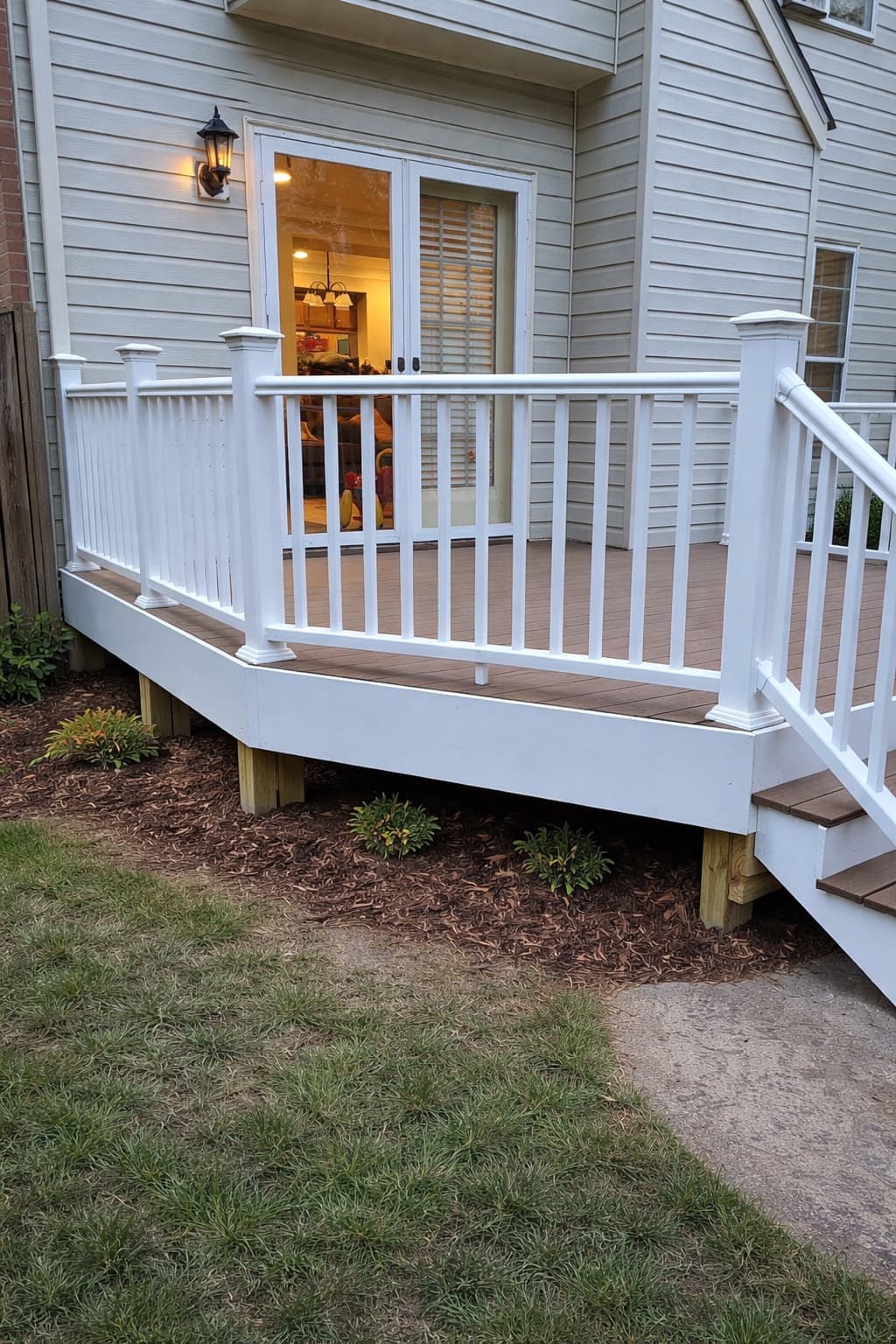
Pressure-treated pine is the budget pick and still makes a real, usable deck. Composite costs more upfront but erases the staining-and-sanding subscription. Hardwoods like Ipe or Cumaru sit at a premium price point — beautiful and tough, for the homeowner who wants a standout and isn't flinching at the invoice.
For a deeper side-by-side of the two most common choices, see our full composite vs pressure-treated decks breakdown, and how to choose deck material for WV weather if the freeze-thaw cycles here are what's on your mind.
A worked example: the 400 square foot deck
Per-square-foot ranges are easier to trust once you see them add up on a real deck. Take a common size — 400 square feet, roughly a 20-by-20 backyard deck:
- Pressure-treated: about $14,000 installed.
- Composite: about $24,000 installed.
At year zero, that's a lopsided comparison — composite costs meaningfully more to get on the ground. But that's exactly where most people stop doing the math, and it's the wrong place to stop.
The 20-year picture
Run the same two decks out over 20 years and the story flips. The pressure-treated deck needs regular sealing and staining, plus board replacement somewhere along the way. The composite deck needs almost none of that. By year 20, the total cost of ownership is roughly equivalent — about $23,700 for pressure-treated versus about $24,000 for composite.
The dollars end up nearly even. Where they part ways is your time. Over those 20 years, the pressure-treated deck asks for over 200 hours of weekends spent sanding, staining, and swapping boards. The composite deck asks for about 30. Same lifetime cost, wildly different number of Saturdays.
That's the real trade. Composite isn't cheaper upfront and it isn't magic — it just moves the spending from your weekends to your closing costs, and for most Eastern Panhandle families that's a trade worth making.
What drives cost besides square footage
Two decks of identical square footage can land at very different prices. Here's what moves the number beyond size:
- Height and stairs. A ground-level platform is straightforward. A deck that's several feet off the ground needs taller footings, more structure, and stairs — and stairs are labor-intensive to build to code. Any deck surface 30 inches or more above grade also requires railing, which adds material and labor.
- Railings. Basic pressure-treated railing is inexpensive. Aluminum, cable, or composite railing systems cost more — sometimes a lot more — and on a smaller deck the railing can be a surprising share of the total.
- Footings and the frost line. In West Virginia, footings have to be set below the 30-inch frost line so they don't heave when the ground freezes and thaws. Deeper footings mean more digging, more concrete, and more labor — and skipping this is the classic cheap-contractor shortcut that causes wobbly, failing decks a few winters later.
- Permits. Both Berkeley County and Jefferson County require a building permit for new deck construction. A licensed contractor pulls the permit and builds to current code. An unpermitted deck becomes a problem at exactly the wrong moment — when you're trying to sell.
- Site grade. A flat, easy-access yard is cheap to build on. A sloped or awkward lot means more structure to level the deck and harder conditions to work in, both of which show up in the price.
None of these are upsells — they're the difference between a deck that lasts decades and one that doesn't. When a quote comes in suspiciously low, one of these is usually the corner being cut.
Frequently asked questions
What's the cheapest way to build a deck in the Eastern Panhandle? Pressure-treated pine at roughly $15–$25 per square foot installed is the lowest-cost real deck. Just budget for staining every one to two years — that maintenance is the trade-off for the lower upfront price.
Is composite really worth double the upfront cost? Over 20 years the total cost is nearly the same as pressure-treated (about $24,000 versus $23,700 on a 400 sq ft deck). The upfront premium buys back your weekends — about 30 hours of lifetime maintenance instead of 200-plus. Whether that's "worth it" depends on how you value your time.
Why do footings have to go so deep? West Virginia's frost line is 30 inches, and footings must be set below it so freeze-thaw cycles don't push them up and rack the deck. It's a code requirement and a durability one — deeper footings are part of why a properly built deck lasts.
Do I need a permit for a deck in Berkeley or Jefferson County? Yes. Both counties require a building permit for new deck construction. A licensed contractor handles the permit and the inspections and builds to current International Residential Code.
Ready to price your deck?
At Real Elite Contracting, we build deck building projects of every size across the Eastern Panhandle — from simple backyard platforms to multi-level outdoor living spaces with custom railings and lighting. We handle permits and inspections, and every estimate is line-itemed in writing, so you can see exactly where your per-square-foot number is going.
We proudly serve Martinsburg, Charles Town, Inwood, Ranson, Hedgesville, Shepherdstown, and the surrounding Shenandoah Valley and Frederick, MD areas.
Get your free deck estimate — call (681) 534-5515 or request one online.
Real Elite Contracting — Family-run by brothers Jose and Miguel. Miguel is a U.S. military veteran and Purple Heart recipient.
Keep reading
 Decks & Outdoor Living·Cost Guide·
Covered Patio and Outdoor Living Cost in Loudoun County (2026)
Read Decks·Comparison·
Composite vs Pressure-Treated Decks in Loudoun County, VA — What's Actually Right for Your Backyard
Read Decks·Permit Guide·
Do You Need a Permit to Build a Deck in Berkeley or Jefferson County, WV? (2026 Guide)
Read